
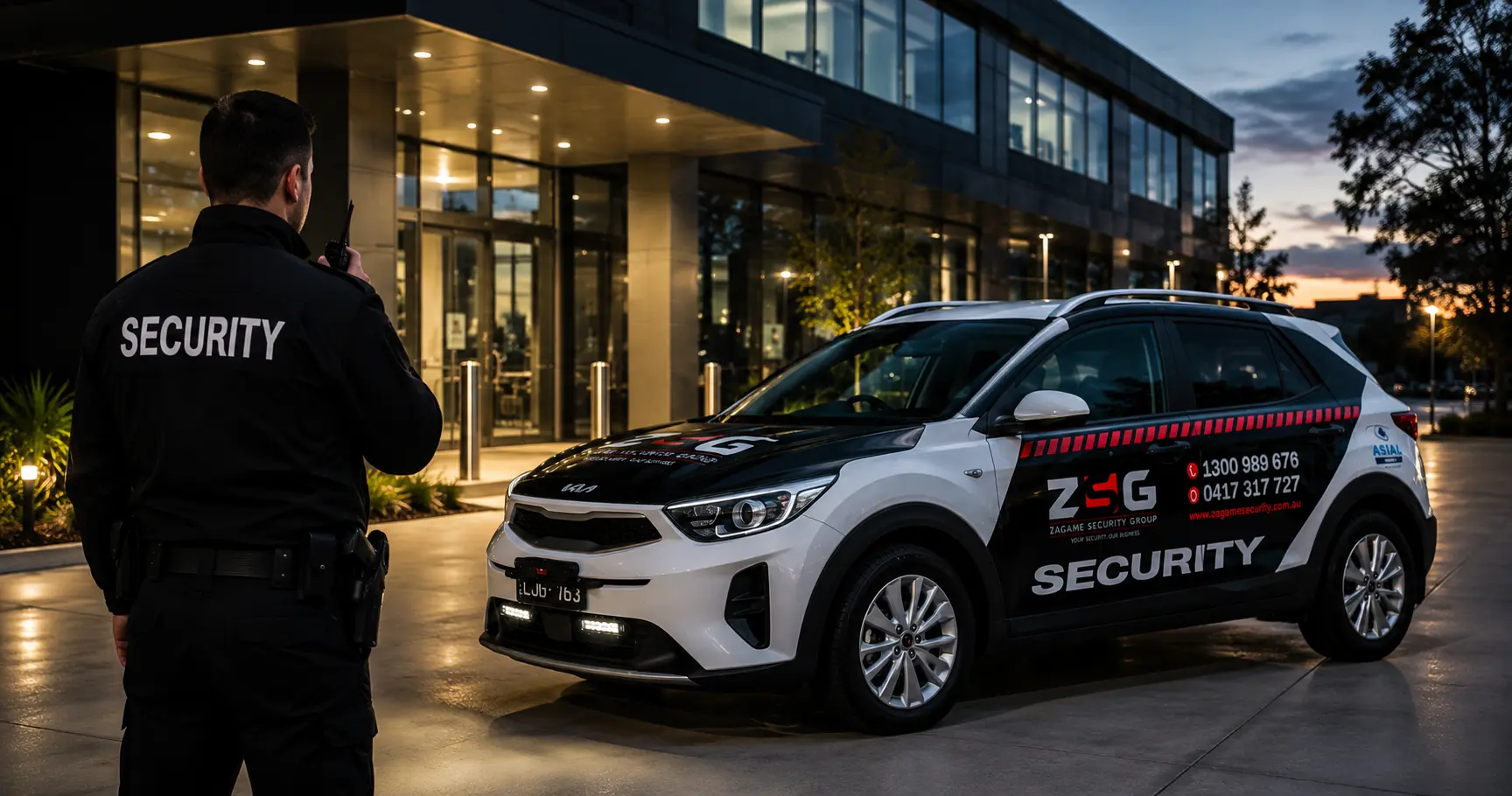
This is one of the most common questions we get from business owners putting together a security plan for the first time — and it’s a genuinely reasonable one to ask, because the two services solve overlapping but different problems, at very different price points.
Here’s how to think about it properly.
What a Static Guard Provides
A static guard is stationed at a single site for the duration of a shift. They’re a continuous, dedicated presence — which means:
- Constant visibility and deterrence for the entire shift, not just a scheduled check
- Immediate on-site response to anything that happens, with no travel time
- Ability to manage foot traffic, entry points, and day-to-day site activity in real time
- A consistent point of contact for staff, customers, or contractors on-site
The trade-off is cost. You’re paying for continuous coverage, which makes the most sense for sites with high foot traffic, high asset value, or an ongoing need for someone to actively manage access and behaviour — not just deter opportunistic risk.
What Mobile Patrol Provides
A mobile patrol service covers multiple sites on a scheduled or randomised route, with guards checking each location at intervals rather than staying put.
- Lower cost per site, since coverage is shared across a route rather than dedicated to one location
- Randomised timing that makes patrol visits unpredictable to anyone watching for a pattern
- Physical site checks — doors, windows, alarms, external areas — at each visit
- Rapid response capability if an alarm triggers between scheduled checks
The trade-off is coverage gaps between visits. A mobile patrol is excellent for deterring and catching issues at low-to-moderate risk sites, particularly after hours, but it isn’t built for sites that need someone physically present managing activity in real time.
A Straightforward Way to Decide
Ask these three questions about your site:
- Does anything need to be actively managed in real time — foot traffic, access control, customer behaviour — or does the site just need to be checked and deterred?
- What’s on-site outside trading hours — is it genuinely empty, or does it hold enough value that a gap between patrol visits is a real risk?
- What’s your risk profile during the hours you’re most exposed — is it steady, or does it spike at specific times (weekend nights, after a big trading day, during a known high-theft period)?
If your answer leans toward “constant activity that needs managing,” a static guard is usually the right call. If it leans toward “mostly empty, but valuable enough to check regularly and deter opportunistic risk,” mobile patrol is often the more cost-effective solution.
Most Sites Actually Need Both — Just Not at the Same Time
A lot of businesses land on a hybrid model without realising it’s an option: a static guard during trading hours when the site is busy, and mobile patrol coverage after close when the risk shifts to opportunistic break-ins rather than active theft or conflict. This is often the most cost-effective way to cover a full 24-hour risk profile without paying for continuous static coverage around the clock.
If you’re not sure which side of that line your site sits on, it’s worth a proper assessment rather than guessing.
Talk to ZSG about Security Guards and
Mobile Patrol options for your site, or call 1300 989 676 for a free coverage assessment.