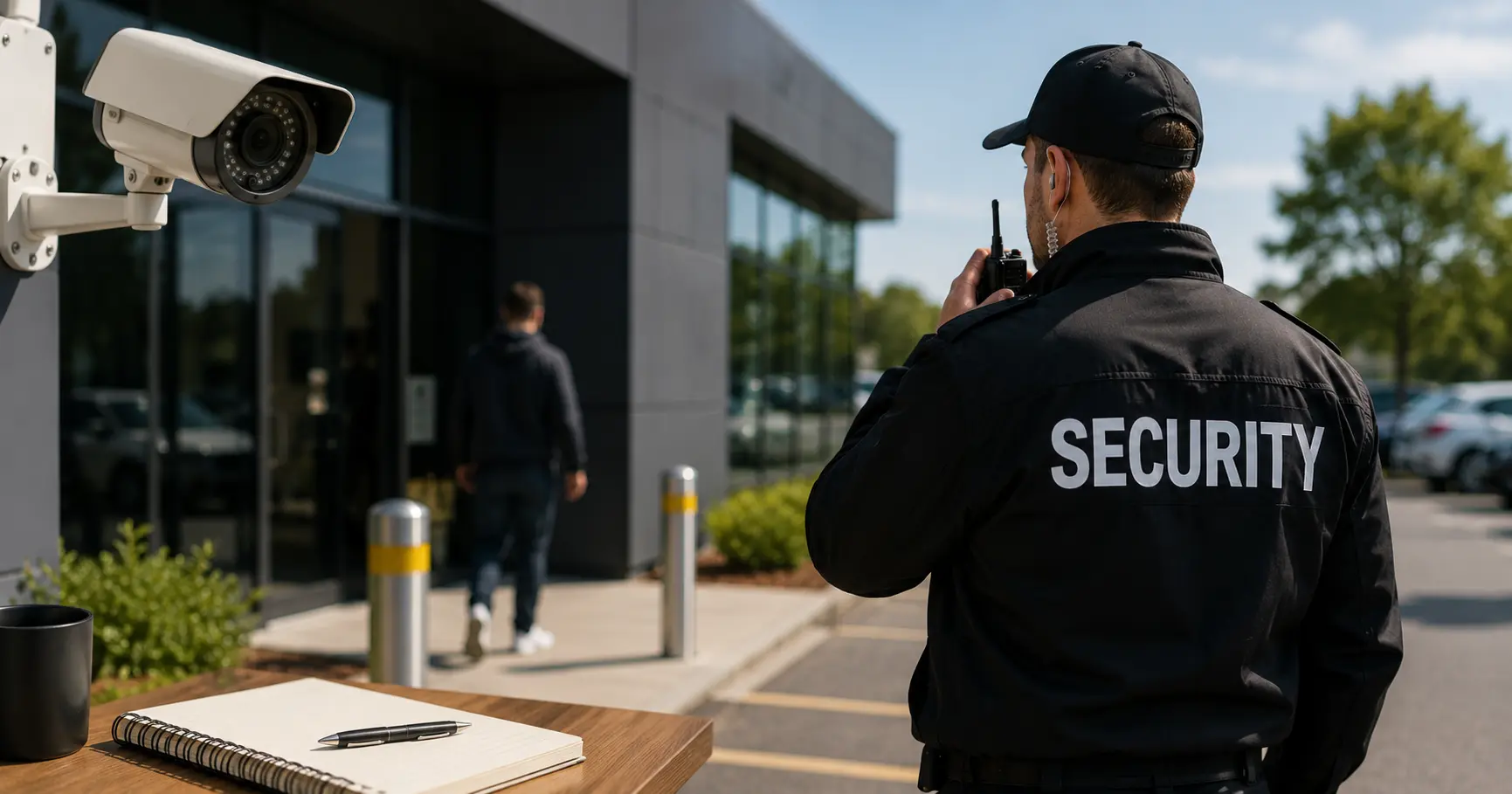
CCTV has never been cheaper, sharper, or easier to install. Cloud storage, motion alerts, and AI-flagged footage have made cameras a default line item for almost every business security setup. That’s a good thing — but it’s led some business owners to a conclusion that isn’t quite right: that better cameras mean guards are no longer necessary.
They solve different problems. Here’s the honest breakdown.
What CCTV Does Well
Modern camera systems are genuinely useful for:
- Evidence — clear footage after an incident, useful for police reports and insurance claims
- Deterrence at a distance — visible cameras do put off some opportunistic behaviour
- Continuous coverage — cameras don’t take breaks, and can watch areas 24/7 without fatigue
- Cost efficiency for low-risk sites where the main need is a record, not a response
Where CCTV Falls Short
The gap shows up in the moment an incident is actually happening:
- Cameras record. They don’t intervene. By the time footage is reviewed, whatever happened has already happened.
- No real-time decision-making. A camera can’t assess a tense situation, judge intent, or choose to de-escalate versus call for backup.
- Blind spots and tampering. Cameras cover fixed angles; a determined offender can identify and avoid them, or disable them entirely.
- Alert fatigue. Motion-triggered alerts are often too frequent to act on in real time, especially for a busy site with legitimate foot traffic.
For a warehouse, retail floor, construction site, or licensed venue, this gap is exactly where losses, altercations, and safety incidents happen — in the window between “something is happening” and “someone reviews the footage.”
What a Guard Adds That a Camera Can’t
A trained security guard brings judgement, not just observation:
- Real-time de-escalation of conflict before it becomes a bigger problem
- Immediate physical presence, which changes behaviour in ways a camera alone doesn’t
- On-the-spot decision-making — assessing whether a situation needs a calm word, a call to police, or an evacuation
- Deterrence through presence, which research and industry experience consistently show is stronger than deterrence through signage or cameras alone
The Honest Answer: It’s Rarely One or the Other
The businesses that get the best outcome usually aren’t choosing guards or CCTV — they’re layering both, matched to the actual risk profile of the site:
- Low-risk, low-traffic sites might be well served by CCTV plus Alarm Monitoring and periodic Mobile Patrol checks.
- Higher-risk or high-traffic sites — retail floors, construction sites, licensed venues, events — generally need Security Guards on-site, with CCTV as a supporting layer for evidence and monitoring.
The right mix depends on your foot traffic, asset value, hours of operation, and past incident history — not a blanket rule either way.
Getting the Balance Right
If you’re not sure whether your current setup leans too heavily on cameras alone, it’s worth a second look. A quick site assessment can usually tell you within the hour whether you’re under-protected, over-spending, or about right.
Request a free security assessment or call 1300 989 676 — ZSG can review your current setup and tell you honestly where the gaps are.