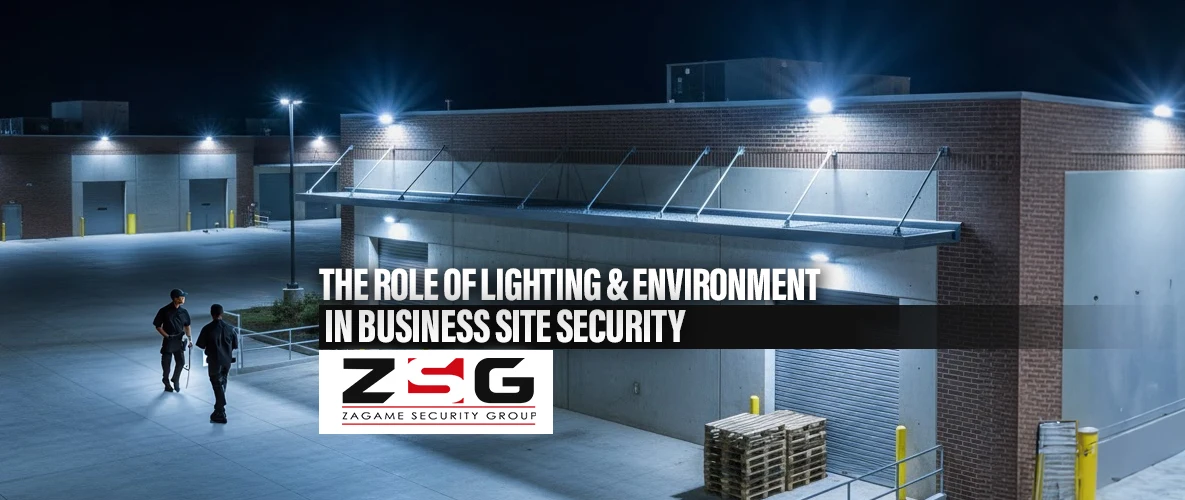
When businesses think about security, their first images might be CCTV cameras, alarm panels or security guards — and while these are important, one often overlooked element is lighting and environmental design. At Zagame Security Group, we regularly see intelligent lighting and site‐environment interventions make a significant difference in preventing incidents and improving detection. This blog dives into how lighting and environmental factors impact business site security, explores best practices and gives actionable recommendations for your premises.
Why lighting and environment matter
Lighting and the physical environment contribute in multiple ways:
- Deterrence: A well-lit site sends a clear signal to would-be intruders that someone is watching, increasing perceived risk of detection.
- Detection: Even if an intruder begins an intrusion, good lighting allows cameras, guards and staff to spot movement or suspicious activity quickly.
- Response/safety: For businesses with staff on-site after hours (e.g., cleaning crews, security escorts, late shipments) lighting ensures safe navigation, minimises trips/falls, and helps staff observe their surroundings.
- Coverage gaps: Many site vulnerabilities occur at external perimeters, access gates, loading zones, external stairways or parking lots — these areas are often under-lit.
Key areas to review
Here are specific zones and environmental features to review for your business premises:
- Perimeter fences and access gates
External fences often get little attention during daylight hours. But at night, dark zones along fences or gates become attractive to intruders who believe they can approach unseen. Ensure these areas are lit, CCTV coverage extends to fence lines, and motion sensors or beam beams are considered. - Loading docks, service entrances & back-of-house areas
These zones often have frequent movement, large access points and may be less visible from public view. Intruders may exploit unstaffed service entrances, sideload doors or roll-up doors. Ensure lighting is adequate, surveillance covers service zones and guards/patrols include these areas in their rounds. - Parking lots, external walkways, stairwells and egress routes
Employees arriving early or leaving late need safe access. Dark parking zones or entry paths may also allow perpetrators to hide. Good lighting plus cameras plus routinely patrolled routes improve security. - Internal corridors and night-shift zones
While internal lighting is usually better, when operations run after hours maintenance, cleaning or storage access may occur in less frequented zones. Maintain clear lighting, signage and visibility. - Vegetation, landscaping and structural obstacles
Overgrown vegetation, tall shrubs, or structural obstacles (planters, storage containers) create hiding spots. Conduct environmental design reviews to remove concealment opportunities, trim back vegetation, and maintain clean sight-lines.
Best practice lighting & environment strategies
Here are recommendations for business site managers:
- Use motion-activated lighting in less trafficked zones (loading bays, perimeter) to alert both cameras and guards of movement.
- Use uniform lighting levels across high-risk zones — avoid a mix of bright and dark spots which create “shadow” concealment areas.
- Choose cool white LED lighting for better colour rendering in camera images (helps identify people, apparel, vehicles).
- Ensure lighting plus surveillance overlap — guarantee that lighting supports camera coverage (field of view, minimal glare, minimal back-lighting).
- Maintain regular lighting maintenance — burnt-out lamps, dirty lenses, or shielded lights reduce effective illumination and create vulnerabilities.
- Conduct site walk-throughs after dark — use guards, patrol staff or managers to walk the site at night as an incognito reviewer and identify dark spots or access points.
- Adopt Crime Prevention Through Environmental Design (CPTED) principles — remove concealment, define clear edges, present surveillance and access control opportunities.
- Integrate into your guard / patrol program — at Zagame Security Group our mobile patrols and guards check lighting, signage, fences, locks and report environmental hazards as part of their rounds.
Why lighting matters for insurance and business continuity
Insurance providers and risk-assessors often look at lighting and environmental design when assessing businesses for premiums or claims. A burglary that exploited an unlit perimeter may lead to higher premiums or additional compliance requirements. By proactively managing lighting and environment, businesses not only reduce incident risk but also demonstrate strong risk management practices.
How Zagame Security Group can help
At Zagame Security Group we offer:
- Site surveys of lighting and environment as part of our asset-protection service. Za Game Security
- Mobile patrols and guard services that include night-time inspections, reporting dark spots, and verifying all external lights, gates, and doors are secure.
- Alarm monitoring and integration of camera alerts with lighting triggers, enabling faster response for after-hours incidents.
- Consultation and remediation advice on how to design or upgrade your site environment for optimum security.
Action plan for your business
Here’s a 30-/60-/90-day plan you can implement:
Next 30 days:
- Walk your site after dark with a flashlight or mobile phone light and record dark/unlit spots.
- Review your site lighting equipment — check for broken/burned-out lamps, dirty fixtures, or blocked lights.
- Review vegetation and landscaping near external access points — trim shrubs, remove clutter, ensure clear lines of sight.
Next 60 days:
- Engage your security provider or a lighting specialist to conduct a lighting audit (include camera-coverage overlay).
- Install motion-activated lighting in identified weak zones.
- Review your guard/patrol schedule to ensure coverage of after-hours lighting inspections.
Next 90 days:
- Integrate lighting inspection into your regular site-security protocol (weekly or monthly).
- Review any incident history in dark zones (e.g., theft, access) and update your site map accordingly.
- Assess if any additional security system (alarm, access control) needs retrofit due to environmental vulnerabilities.
Lighting and environmental design are not “nice extras” in business physical security — they are foundational. When combined with professional guard services, patrols, alarm monitoring and integrated systems, they significantly raise your deterrence, detection and response capability.
If you’re ready to review your site lighting or environment, or enhance your guard/patrol program, contact Zagame Security Group today. We’d be pleased to help you design a safer, smarter business site.