It’s one of the most common questions business owners ask when they first start thinking seriously about security: do I need a security guard, or is alarm monitoring enough?
The honest answer is that it depends — on your site, your hours, your risks, and your budget. At Zagame Security Group, we’ve helped businesses of every size across Gippsland, Latrobe Valley, Sale, and Melbourne work through exactly this question. Here’s a clear breakdown to help you decide.
What Alarm Monitoring Actually Does
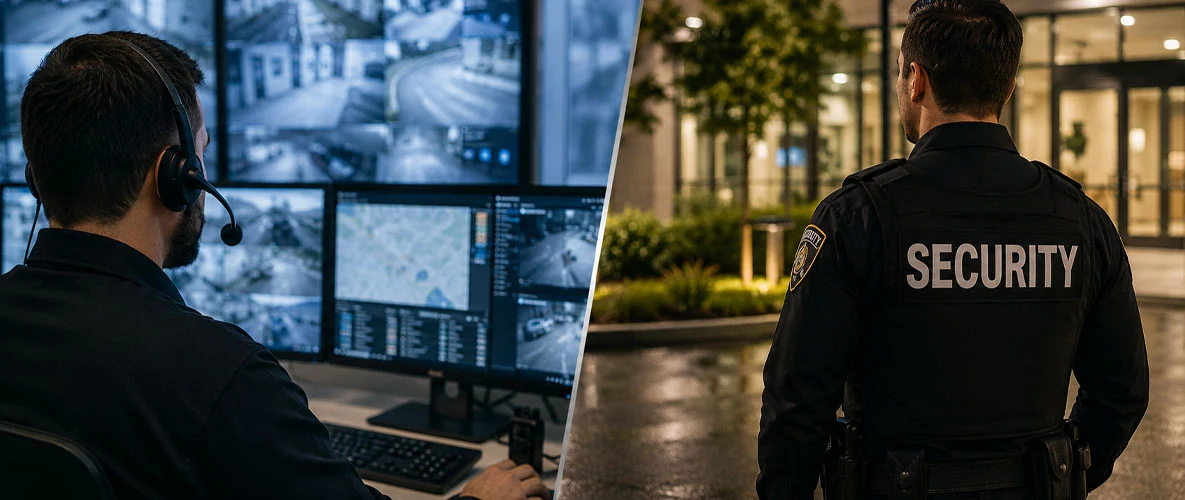
Alarm monitoring means that when your alarm is triggered — by a break-in, a fire, or a duress signal — a live operator is immediately notified and responds accordingly. At ZSG, our monitoring centre is staffed 24 hours a day by trained operators who can contact you, dispatch security personnel, or alert emergency services depending on the situation.
Alarm monitoring is particularly powerful because it provides constant coverage without requiring a physical presence on site. It’s cost-effective, always watching, and ensures that a triggered alarm doesn’t go unnoticed at 3 am on a Sunday.
Best suited for:
- Small-to-medium businesses that are closed overnight or on weekends.
- Sites with existing alarm infrastructure looking to add a human response layer.
- Businesses in lower-risk areas that still want peace of mind after hours.
- Properties where full-time guarding would be cost-prohibitive.
What a Security Guard Provides That Monitoring Cannot
A security guard is a physical, visible presence. That distinction matters more than people realise. Visible deterrence — a uniformed officer on site — prevents incidents before they occur. Alarm monitoring, by definition, only responds after a trigger. A guard can intervene before a situation escalates, manage access in real time, interact with staff and customers, and use their judgement in complex situations.
Guards are also essential for environments where ongoing human interaction is required: retail floors, licensed venues, construction sites, hospitals, or any location that sees regular foot traffic during operating hours.
Best suited for:
- Licensed venues requiring crowd control and patron management.
- High-value retail environments during trading hours.
- Construction sites with expensive equipment on site after hours.
- Government buildings, banks, or facilities with strict access control needs.
- Events of any scale — from local markets to large public festivals.
The Case for Using Both
Many of ZSG’s clients use a layered approach: alarm monitoring provides the overnight watchful eye, while guards are deployed during business hours or high-risk periods. This combination gives you continuous protection without the cost of round-the-clock guarding.
For example, a retail centre in Morwell might have security guards on the floor during trading hours, then switch to alarm monitoring and a mobile patrol after close. If the alarm triggers overnight, ZSG’s monitoring operator responds immediately and can dispatch a guard within minutes.
This integrated approach is not only more comprehensive — it’s often more cost-effective than trying to rely solely on one solution.
So, Which Is Right for You?
Ask yourself three questions:
- What are your highest-risk periods — trading hours, overnight, or both?
- Does your business involve public interaction, cash handling, or high-value assets that require a physical response?
- What is your current security infrastructure, and where are the gaps?
If you’re unsure, the best starting point is a conversation with ZSG. Their team will assess your specific site, identify vulnerabilities, and recommend a tailored solution — whether that’s monitoring, guards, mobile patrols, or a combination of all three.
Get the Right Advice for Your Business
Zagame Security Group offers free, no-obligation security consultations for businesses across Victoria. Call 1300 989 676 or visit zagamesecurity.com.au to get started.